Labour's tax changes - what you need to know
3458POSTED:
—
Views

Articles by John Rowe.

With the Labour Party winning the 2020 election, they now are expected to implement their proposed higher individual tax bracket of 39% for income over $180k. This is anticipated to come into effect in 2021/2022 income year.
This imminent change makes it an opportune time to ensure your affairs are structured in the best possible way for both asset protection and tax – because if you don’t address this now, you may end up paying a lot more tax than is necessary.
It makes good sense to legally maximise the deductions you are entitled to and to periodically review your structures to ensure they are appropriate for your current circumstances and the prevailing tax environment. If you set up your structures several years ago, they will almost certainly need to be updated – structures need to change as the times and legislation change. The impending new tax bracket is the perfect trigger to do this.
For example, if you hold investments/shares in your personal name, or have entities with historical profits that haven’t yet been distributed via dividends, it is likely you will be in a less than optimal position from a tax perspective once Labour’s new tax increase comes in. Currently, the difference between the company tax rate and the top individual tax rate is just 5%. With the change, it is expected to move to 11%, which for many people will be a significant increase. Therefore, it is prudent to look at alternatives. Additionally, holding wealth in your personal name or a trading entity puts it at risk, so is generally not ideal from an asset protection perspective.
However – and this is very important – any changes you make must be dealt with extremely carefully in order to stay clear of anything that could be construed as tax avoidance. You should seek specialist advice around this. It is also worth noting that although Labour have said the tax increase will only apply to individuals, it would not surprise us to see it extended to trusts at some point. At the same time, we believe it is highly unlikely that Labour would ever change the company tax rate. These are factors to consider when discussing your options with your tax adviser.
If you have any questions or would like a review of your structure, contact your GRA Client Services Manager. Or, or if you are not a GRA client, book a meeting with one of our senior consultants to see how we can help. (The first meeting is free if you are new to our practice.) Ph +64 9 522 7955 or info@gra.co.nz.


This letter is to express my appreciation for the assistance and encouragement of both Anthony Lipscombe and particularly John Heaslip over the last financial year. The period since activating my trading trust has been one of considerable stress, as well as personal development, as I embarked on this as a relative business neophyte with virtually no awareness of the contemporary requirements of running a business, particularly the financial records aspect. During much of this period I have therefore felt considerable out of my depth. However I have been lucky enough to have had the benefit of the advice and support of John Heaslip in rationalizing what was a fairly chaotic set of records of the first year property trading. I am able to say that John in particular, has been unstinting in his attention to my needs and has done so in a manner which has never alluded to my extremely rudimentary grasp of managing a business, or even of being unable to set out a spread sheet properly. The result of the above guidance is that now, although my trading trust would still not be able to operate without the advice of GRA, I do least feel a sense of satisfaction that I have got to my present point without major disaster and that my property trust does now have some kind of firmer basis for any future activities - Name withheld by request
Investing in residential property?
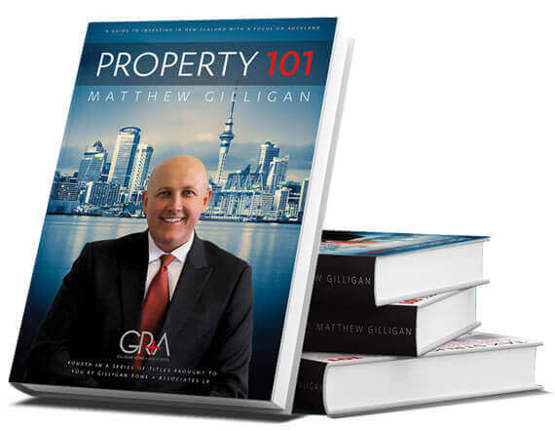
If you're investing in residential property, seeking to maximise your ability to succeed and minimise risk, then this is a 'must read'.
Matthew Gilligan provides a fresh look at residential property investment from an experienced investor’s viewpoint. Written in easy to understand language and including many case studies, Matthew explains the ins and outs of successful property investment.









 Free Resources, Tools & Downloads