Capital Gains Tax on its Way?
2581POSTED:
—
Views

Articles by Matthew Gilligan.

A Victoria University Tax Working Group is currently considering the future direction of the New Zealand tax system. The Group is made up of various governmental, academic and industry professionals and is expected to produce a report which will be influential on the government's future direction in terms of tax policy later this year.
At its most recent meeting, the Tax Working Group considered how the tax take might be increased and in particular looked at three options being:
In short the Tax Working Group confirmed that a broadening of the tax base is critical in the long term to accommodate the government's stated direction in terms of lowering personal (and trust) tax rates. In doing so, a sustainable, long-term tax base is required and to this end it seems that property is an obvious target.
Capital Gains Tax
In terms of a capital gains tax the Group fielded submissions on a new capital gains tax applying to gains in relation to property. At this discussion stage various permutations of the rule were floated, including whether the tax should apply only on sale or perhaps on an accrual basis (ie based on unrealised gains) and also whether there should be exclusions, such as for private residences.
Treasury submissions noted that a capital gains tax such as this could nearly offset the cost of dropping the personal and trust tax rates to match the company rate of 30%. They also argued that a capital gains tax would improve efficiency of the tax system by more comprehensively taxing economic income.
Interestingly, submissions by the IRD argued that the advantages of capital gains tax would not outweigh its disadvantages. Principally the IRD were concerned about the difficulty of applying a capital gains tax regime that would provide exemptions for private residences. Comments from the Tax Working Group suggested that they were not overly enthusiastic about this as an option and wanted to explore other options.
Notwithstanding this, they have asked for further work on the economic efficiency of taxing capital gains.
Land Tax
Next the Group looked at land at a so-called land tax, The rationale here is that land (most probably excluding improvements) is subject to an annual tax perhaps, say, 0.1% of the value. It perhaps might be fair to say that there were some perceived advantages of this measure as compared to capital gains tax in that it is likely to be easier to implement and administer.
Having said that, there was concern that the impact that such a tax might have on the value of land and this area was noted for further research.
Risk Free Rate of Return
Finally, the Group looked at a risk free return method of tax on rental properties. The Group commented that there is a “glaring hole” in the current tax system in relation to the rental property sector and a tax measure such as this was seen as a potential solution to this problem. Under the risk free return method, a risk free rate of return would be applied to the net equity in the property and included in taxable income.
Rent from land and other expenses relating to the investment would not be taxed nor deductible. For example, if you had a $400,000 rental property and $300,000 debt you would pay tax based on the risk free rate of return on the $100,000 equity. This would be irrespective of your cash profit or loss position.
The Group was concerned that such a tax might lead to rents being increased which would have a negative impact on lower income earners, and they are also concerned about taxation arising when there was not cash income to match it. It was also noted that any tax that focused solely on rental properties might disproportionately divert investment into owner-occupied housing.
Other tax measures that got a mention included:
Conclusion
In summary, it seems likely that the Tax Working Group will make suggestions to government that have an impact on property investors. We see it as perhaps unlikely that a capital gains tax will be implemented. The potential land tax or risk free rate of return methods are potential alternatives. We would not be surprised to see the depreciation rules come under heavy focus, but whether this will raise enough additional revenue is questionable.


Property School taught me there are more ways than I had thought about to grow wealth through property, and that wealth creation really is a possibility for us. - Lawerence Wong, April 2019

Investing in residential property?
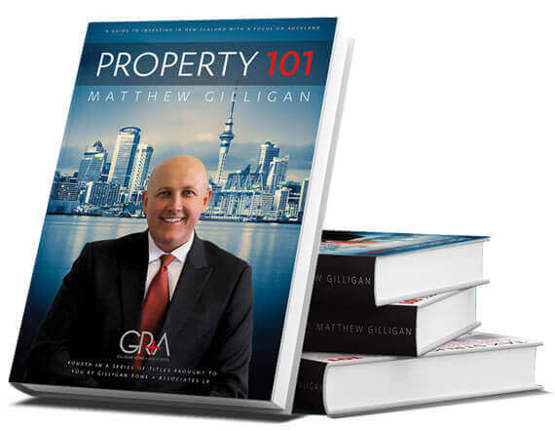
If you're investing in residential property, seeking to maximise your ability to succeed and minimise risk, then this is a 'must read'.
Matthew Gilligan provides a fresh look at residential property investment from an experienced investor’s viewpoint. Written in easy to understand language and including many case studies, Matthew explains the ins and outs of successful property investment.








 Free Resources, Tools & Downloads