Should you fix, refinance or wait?
6624POSTED:
0
Views

Articles by Salesh Chand.

If you’re a long-term property investor, now is a good time to review your lending. Interest rates are rising, and for most investors who plan to hold, fixing for two to three years gives useful certainty. Refinancing could also put cash back in your pocket, with banks offering cash contributions to win new customers. And if you don’t already have a working capital facility, setting one up gives you a buffer if things get tighter.
That’s the short version of our recent webinar, Should You Fix, Refinance or Wait?, which I presented with mortgage adviser Kris Pedersen from Kris Pedersen Mortgages. Kris has been my own mortgage adviser since I bought my first property in 2010, and we’ve worked together with clients for about 20 years. In this post, I’ll explain the reasoning behind that advice: where the market and interest rates look to be heading, how banks are assessing borrowers, and what lending options are opening up.
One thing to be clear on: I'm a chartered accountant and property investor, not a financial adviser. The lending and interest rate guidance in this post comes from Kris, and it's general in nature, so please talk to a qualified mortgage broker about your own situation.
You can watch the full webinar recording here, or at the bottom of this blog.
Right now it's a buyer's market, especially for development sites. In Auckland, we've seen sites that once sold for $1.5 million going for around $900,000, as fewer mum and dad investors take on development projects.
Here's what else I'm seeing on the ground:
At the time of the webinar, forecasts pointed to prices falling around 0.7% over the next 12 months. That's a flat market, not a crash, but it does mean sellers are more willing to negotiate. My rule hasn't changed: buy at a discount, and only buy cash flow positive. If the rent can't cover the property and values are flat, you're carrying the risk with no upside.
The short answer: up, but slowly. After bottoming out at 2.25% last November, the Official Cash Rate (OCR) rose to 2.5% in July and 2.75% in September.
The reason is inflation. At the time of the webinar it was sitting at 4.1%, well above the Reserve Bank's 1–3% target. The Reserve Bank signalled no change in October, with increases likely from December, and it has pointed to a peak of around 3.25%.
Kris made an important point here: wholesale markets are pricing in more than that. Swap rates, which feed directly into the fixed rates banks offer, suggest the OCR could be closer to 3.8% in a year's time. Offshore events, particularly the conflict involving Iran and its effect on oil prices, are adding to that pressure.
There's a balancing factor, though. Unemployment is at its highest in over a decade, and sectors like construction, retail and hospitality are doing it tough. That may stop rates rising as far as some people expect. Our shared view is that rates are more likely to go up than down.
If you're on a floating rate or coming off a fixed term soon, now is the time to look at your options rather than waiting to see what happens.
Kris's general guidance depends on your plans for the property:
At the time of the webinar, Kris was seeing two-year rates around 5.15% and three-year rates around 5.29%. One-year rates were sitting around 4.9% and forecast to rise towards 5.5% over the next 12 months. For long-term investors, locking in some certainty at today's rates looks reasonable, especially if you negotiate hard with your bank.
Banks don't assess you at the rate you actually pay. They use a higher "test rate" on a principal and interest basis, across all your existing and new debt. Most banks are now testing at around 7%, up from about 6.7% recently (and as high as 9.25% three years ago).
This matters even if you're not planning to borrow more. Extending an interest-only period, selling one property while keeping others, or moving a property into a trust can all trigger a full assessment.
Kris shared a client file he'd been working on:
The clients are nearing retirement and wanted more control. Now, if they sell the unencumbered property, they keep the proceeds rather than a bank deciding what happens to them.
Often, yes. Banks are competing less on interest rates and more on cash contributions, and we've seen clients receive $30,000 to $60,000 when they move.
There's a reason for this. Many people now refix through their bank's app and simply accept the rate offered, so banks earn a higher margin across their whole mortgage book. The people who shop around are the ones getting the cash.
A few things to keep in mind:
Even if you stay put, a good adviser can use what other banks are offering to negotiate a better deal or more facilities with your current bank.
If there's only one thing you take from this blog, it's this: set up a working capital facility. It's the single thing that has made the biggest difference to my own investing.
A working capital facility is an overdraft, or revolving credit you can draw on when you need it. With an overdraft or revolving credit, you only pay interest on what you use. It's your backup if something goes wrong, and you can access it without having to ask the bank each time.
In one client example I shared, the owners had just $50,000 of accessible cash against a portfolio of property, business and family home. That's a stressful position: if anything goes wrong, where does the money come from? By restructuring, we increased their working capital to $540,000, and the whole picture became much more comfortable.
When I started out, Kris set me up with a $40,000 overdraft. Back then it felt like winning Lotto. Today, having access to working capital means I can act on a good deal first and work out the funding after.
A word of caution: these facilities suit people who are disciplined with money. If you tend to spend whatever's available, be honest with yourself before setting one up – you might do yourself more harm than good.
Funding is getting easier than it has been for a long time, between both banks and non-bank lenders.
Banks look at your whole financial position, so investors with large portfolios can hit a wall on affordability. On the other hand, some non-bank lenders now assess only the property you're offering as security. Kris explained that one approach is to test whether 80% of the rent covers the loan at around 6.5%. If it does, they may lend even if you don't meet bank criteria across your whole portfolio.
Some investors are using this to top up depleted revolving credit facilities without having to sell. Kris is also helping developers on non-bank rates above about 6.75% move to lenders offering low to mid 6% rates, longer terms and much lower fees.
Bank funding is almost always cheaper, so that's where Kris starts. Non-bank lending is the next option when banks can't help.
Loan-to-value ratio (LVR) rules are loosening:
This could suit someone who wants to buy now while it's a buyer's market, and sell their existing property later when conditions improve. Just make sure the numbers still stack up.
Both Kris and GRA have long recommended against having all your lending with one bank. While LVR settings are relaxed, it may be a good time to borrow more against your investments with one bank and build up equity in your family home with another. LVR rules have tightened quickly before, and having equity in your home with a separate bank gives you room to move if they do.
Banks are fairly relaxed about lending to businesses at the moment. The catch is that, if you go straight to your bank, they'll often take security over your family home and ask for personal guarantees.
That's a real risk. Business carries risk, and if something goes wrong, the family home can be exposed. If you've gone to the effort of setting up a family trust to protect your home, don't undo that protection by giving security over your home.
Our approach is to keep business lending separate from your home and residential portfolio. Ideally, the loan sits in the business, with security limited to business assets where possible. If you already have business lending secured over your family home, talk to Kris about whether that can be unwound.
Don't sit on this. Plenty of people listen to a webinar or read a blog, nod along and do nothing. Here's where I'd start:
If you'd like to talk through asset protection, structures or tax planning, the GRA team is here to help.
In September 2026 the Reserve Bank signalled OCR increases from December 2026, with a likely peak of around 3.25%. Wholesale markets were pricing in more, closer to 3.8%. Most commentators expect rates to rise rather than fall, though a weak economy may limit how far.
A non-bank lender is a finance company that isn't a registered bank. Some assess only the property being offered as security, rather than your whole financial position. Their rates are usually higher than banks', so they're generally used when bank funding isn't available.
This article is general information only and reflects market conditions and interest rates at the time of the webinar in September 2026. It is not financial, lending or tax advice. Your situation is unique, so please speak to a qualified financial adviser, mortgage adviser or accountant before making any decisions.
At the time of the webinar, most banks were testing affordability at around 7% on a principal and interest basis. This applies to all your existing and proposed debt, even if your actual rate is lower or you're on interest only.


Six weeks is a very small commitment to gather a holistic view of property investment. [Why, how, and how you can make a tangible impact to your life through property.] Fantastic! All from industry experts. - TZ - June 2017

Investing in residential property?
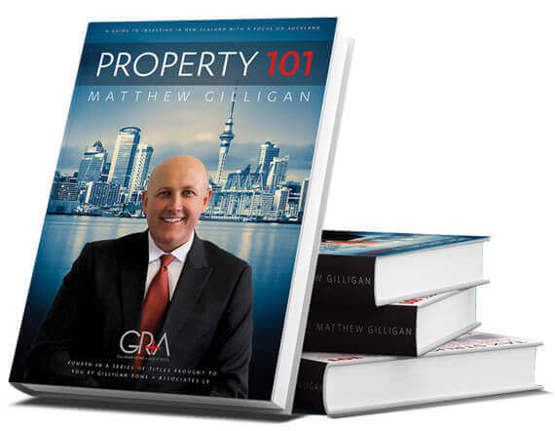
If you're investing in residential property, seeking to maximise your ability to succeed and minimise risk, then this is a 'must read'.
Matthew Gilligan provides a fresh look at residential property investment from an experienced investor’s viewpoint. Written in easy to understand language and including many case studies, Matthew explains the ins and outs of successful property investment.








 Free Resources, Tools & Downloads