Purchase Price Allocation in NZ Commercial Property Sales
6218POSTED:
—
Views

Articles by Anthony Strevens.

Purchase price allocation (PPA) has become one of the most important tax considerations in New Zealand commercial property transactions.
Since mandatory PPA rules began in 2021, and with commercial building depreciation removed from 1 April 2024, both purchasers and vendors face real financial consequences if they fail to correctly allocate the sale price across land, buildings and depreciable assets.
Getting the allocation right before signing can save tens or hundreds of thousands of dollars in tax – or cost the same if done poorly.
A mandatory PPA is required for:
• Commercial property with a purchase price of $1 million or more (including GST)
• Residential land and chattels transactions of $7.5 million or more, excluding owner-occupier transactions
The allocation must break the purchase price into:
1. Land (non-depreciable)
2. Building structure (non-depreciable)
3. Depreciable fit-out (e.g., lighting, non-structural partitions, electrical reticulation, air conditioning, lifts, fire alarms, floor coverings)
Because building depreciation is no longer available, correctly identifying and valuing depreciable fit-out has become significantly more important.
If no allocation is included in the agreement:
1. The vendor has three months from settlement to decide an allocation
2. If the vendor doesn't do so, the purchaser then has three months to make their own allocation
3. If neither party allocates, the IRD may impose an allocation, binding on both sides
The financial consequences can be significant:
• The vendor cannot dispute a purchaser or IRD unilateral allocation
• A purchaser or IRD may assign higher values to the vendor's depreciable assets, creating depreciation recovery income
• The vendor may lose the opportunity to claim a loss on disposal if assets are worth less than book value
Why PPA matters more after 1 April 2024
With building depreciation removed:
• Buildings are fully non-depreciable
• Fit-out remains depreciable
• Failure to identify fit-out can cost a purchaser significantly in lost deductions
Common issues
1. Listing chattels but ignoring fit-out - standard chattel lists often don't capture building fit-out
2. No contractual mechanism for post-auction allocations - auction agreements often lack PPA provisions, creating risk
3. No asset list provided - while not legally required, exchanging asset information supports an accurate and defendable allocation
Do's and don'ts for purchasers
Do:
• Insist on including a PPA schedule in the agreement
• Engage your accountant before signing
• Seek a realistic market-based allocation that recognises depreciable fit-out
• Request clarity on what assets are included
• Ensure auction agreements allow post-auction allocation
Don't:
• Leave allocation until after settlement
• Accept allocations that undervalue fit-out
• Assume standard chattel lists include all depreciable assets
• Agree to use vendor book values
Example: GRA advised on the purchase of an industrial space where the offer had no allocation towards depreciable items, despite there being a reasonable amount of depreciable assets within the building. We identified this gap and adjusted the PPA so a portion of the purchase price was allocated against depreciable assets, enabling future depreciation claims and lower tax bills.
Do's and don'ts for vendors
Do:
• Ensure the agreement includes a fair allocation
• Use market values supported by valuation evidence
• Consider tax implications of depreciation recovery
• Act promptly – you have limited time if the agreement is silent
Don't:
• Assume doing nothing is safe
• Ignore depreciable fit-out values
• Provide outdated asset schedules without review
Example: A GRA client in the lower North Island was selling a commercial building with significant fit-out including heat pumps and non-load bearing partitions. This was on the clients books because they had negotiated to provide the fit-out as part of the original lease agreement. They were about to sign the sale agreement when they realised they should seek our advice.
We identified that the allocation of the purchase price was unreasonably skewed towards fit-out and chattels, which would have resulted in significant depreciation recovery income. They negotiated changes to reflect fairer market value for the depreciable items, saving over $10,000 in income tax.
Practical tips
• Always document the PPA in the agreement
• Use percentages or dollar values that total the purchase price
• Consider specialist fit-out valuations for complex buildings
• Involve advisers before agreements go unconditional
• Remember the IRD may challenge unrealistic allocations
Conclusion
Purchase price allocation is now central to New Zealand commercial property transactions. With mandatory allocation rules, strict timeframes, and the removal of building depreciation, both buyers and sellers need to approach PPA proactively.
A well-constructed allocation provides tax certainty, reduces risk, and ensures both parties reflect true market value of the assets being transferred. Ignoring PPA, or treating it as a minor admin step, can be costly.
If you need help preparing or reviewing a PPA schedule, contact your GRA Client Services Manager or reach out for a free initial meeting if you’re not already a client.


Thank you so much for your help! I would like to make special mention of how impressed I am with the level of service GRA provided, start to finish. You are all highly professional and helpful and you communicate instructions in a clear and concise manner which made it simple and stress free. I also greatly appreciate that you were able to assist us within the limited time frame.
- Jennie, December 2021
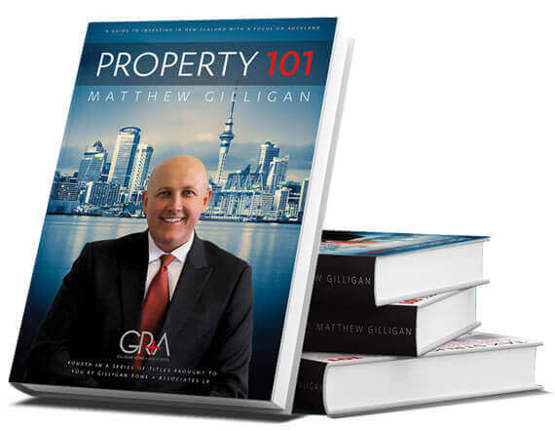
Investing in residential property?
If you're investing in residential property, seeking to maximise your ability to succeed and minimise risk, then this is a 'must read'.
Matthew Gilligan provides a fresh look at residential property investment from an experienced investor’s viewpoint. Written in easy to understand language and including many case studies, Matthew explains the ins and outs of successful property investment.









 Free Resources, Tools & Downloads